Ventilation and CO₂ measurement, the latest recommendations!
Since May 19, 2021, we are living a new stage of decontainment: the reopening of the Establishments Receiving the Public (ERP), a curfew at 21h ... However, this gradual return to a "normal" life must be accompanied by rules defined in large part by the High Council of Public Health, known as HCSP. Indeed, as long as the majority of us are not vaccinated, it is necessary to apply and maintain a certain number of barrier gestures.
Deciphering "Covid-19: aeration, ventilation and CO₂ measurement in ERP"

In this text published on May 3, it is recommended to put in place an environmental strategy to control air quality in each ERP in the context of the COVID-19 pandemic.
More concretely, the ventilation of closed spaces is a strategic point for the reopening of the ERP. Indeed, in some cases, barrier measures - such as the wearing of masks in restaurants or nursery schools - cannot be applied, so it is necessary to ventilate the closed space to avoid the spread of the virus. It is recommended to open windows for at least 5 minutes every hour, or to leave doors and windows open to promote air renewal.
The HCSP also recommends conducting in ERP (schools and universities, sports facilities, cultural venues, etc ...) to conduct measurement campaigns of the rate of carbon dioxide (CO₂). Indeed, the air renewal rate can be easily approached by measuring the concentration of CO₂ in the air.
A CO₂ concentration higher than a threshold of 800 ppm should lead in all cases not to occupy the room and to take action in terms of ventilation/air renewal and/or reduction of the number of people admitted to the premises of an ERP.
What does this mean for businesses?
By definition, a company is an Establishment Receiving the Public (ERP). Therefore, they have to prepare themselves to welcome their employees again. From May 19, those who are teleworking can, if they wish, return to the company for one day a week.
In order to protect them, the national protocol to ensure the health and safety of employees in companies facing the epidemic of COVID-19 emphasizes the control of ventilation of premises. This protocol is based on the text of the HCSP, which states very clearly on page 9 that companies must ensure that the air renewal rate by measuring carbon dioxide (CO₂) in the air.
Working meeting in 2019

Working meeting in 2021

What about schools, colleges and high schools?

The health protocol for schools and colleges has been in force since the beginning of the pandemic. It is based on the prescriptions issued by the Ministry of Solidarity and Health in the light of the opinions issued by the High Council for Public Health (HCSP) as well as on the legislative and regulatory provisions in force.
It is intended for local authorities, decentralized State services, management staff and all members of the educational community. The measures to be taken must take into account the specific context of each school or establishment.
In summary, the text recommends monitoring the renewal of air in enclosed spaces by installing CO₂ detectors expressing the rate in ppm or by indicator lights.
What if we imagined the future?
The air we breathe is important for our well-being and even more for our health. According to Santé Publique France, exposure to fine particles causes more than 40,000 deaths in France and reduces life expectancy by 8 months. Despite the economic impacts, the Spring 2020 containment has shown a positive impact on the environment with an improvement in air quality.
Some numbers:
2,300 deaths prevented related to reduced exposure to particulate matter, which has multiple sources and represents background pollution,
1,200 deaths prevented in connection with a decrease in exposure to nitrogen dioxide (NO₂), which is primarily related to road traffic.
However, the pandemic has demonstrated that measuring CO₂ in enclosed spaces is essential in order to control the spread of the virus. Its purpose is to check that the air renewal is done correctly and regularly.
Is this detection of CO₂ in our indoor environment the first step towards awareness?
Indeed, indoor enclosed spaces are much more polluted than the outside, yet we spend 90% of our time indoors!
The pollutants found in our interiors are numerous: volatile organic compounds, ethylene oxide, fine particles, formaldehyde, ozone, nitrogen dioxide, ammonia, carbon dioxide, carbon monoxide, hydrogen sulfide ....
And their sources are multiple:
- Furniture, paint, carpets, textiles, adhesives, building and insulation materials.
- Copying machines and other office equipment
- Cleaners, disinfectants, cosmetics
- Human presence, air containment
- Fossil fuel combustion, heating processes, tobacco smoke, cooking
- Old pipes, sewers, outdoor air
Indoor air quality is as important as outdoor air quality. Putting sensors is a first step but the ultimate goal is to improve the quality of the air we breathe.

Thanks to its technology, the Rubix POD 2 is able to measure different parameters and analyze the indoor environment. It is this complex analysis that allows to bring corrective actions to improve the air quality or other problems like
- Detection of disinfection by cleaning products
- Detection of disinfection by ozone
- Detection of combustion type pollutants
- Detection of odors Urine and Excrement
Our selection
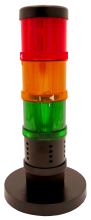
To protect all persons staying for a long time in a closed space, the High Council of Public Health (HCSP) recommends a ventilation from 800 ppm* (April 2021).
Available on the UGAP market under the reference 3009784
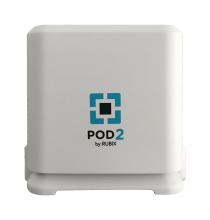
To identify, quantify and map the source of nuisances and have a better management of closed spaces: offices, open-space or any ERPs (Establishments Receiving Public ...)