


All about confined spaces
Confined spaces can be found in many industries, affecting thousands of employees. In these spaces, there are numerous risks due to oxygen-poor, toxic or explosive atmospheres, as well as risks of falling from height and drowning.
Before any work is carried out, precautions must be taken and personnel trained to limit the risk of accidents.

What is a confined space ?
A confined space is defined as a totally or partially enclosed space with the following characteristics:
- It is neither designed nor intended to be occupied by personnel working indoors.
- The operations carried out there are then defined as exceptional, whether at the stage of manufacturing these spaces, their upkeep (cleaning in particular) or their maintenance (periodic checks, repairs).
- Means of access both inside and out are restricted.
- When entering these spaces, operators may be exposed to a large number of risks that need to be controlled (inadequate natural ventilation, nature of the work to be carried out, etc.).
Some examples of confined spaces:
Wells and pits, Pipes, sewers, visitable collectors, Lift stations, Screening stations, Chlorination and ozonation stations in water treatment, Long and narrow galleries, Tanks, reservoirs, vats, Sludge treatment or storage rooms, Chemical storage rooms, Silos, Crawl spaces, cellars, etc.
Who enters confined spaces ?
- Employer or space owner
- Maintenance services
- Specialized companies
- Rescue teams
- Emergency services
Why enter a confined space ?
- To carry out an inspection or surveillance
- To clean
- For repairs and maintenance
- To build
- For rescue
What is the regulatory framework for confined spaces ?
INRS has defined protection methods for work carried out in these environments, which are laid down in :
- RECOMMENDATION : R447 - to prevent accidents when working in confined spaces
- GUIDE : ED6184 - Confined spaces
- TRAINING : CATEC (R472 and ED6026 from INRS) - training for companies that may work on drinking water and wastewater networks
What are the risks associated with confined spaces ?
Confined spaces are dangerous because they contain an atmosphere that is not easily renewed. The hazards related to confined spaces need to be taken into consideration before entering the space or rescuing a person. They are split into three categories :
- Physical hazards (risk of falling, mechanical, electrical and thermal hazards)
- Hazards related to the atmosphere (risk of asphyxiation, intoxication, fire-explosion)
- Hazards related to the configuration (access risks)
The majority of accidents, often serious or even fatal, which occur during work in confined spaces are linked to an oxygen-deficient atmosphere, or the presence of toxic gases or vapors.
What are the prevention measures ?
Identifying and preventing risks requires a prior analysis of the situation, a good knowledge of the processes (materials used, chemical or biological reactions, etc.), and a reconnaissance of the site.
Once this identification is complete, plans and permits need to be put in place. To do this, you need to plan :
- the appointment of a manager
- drawing up a prevention plan and specific intervention procedures
- issuing entry permits
- operator training
- communication of measures to be taken in the event of an incident or accident.
The last point concerns the correct operation of all equipment, which must be checked and verified :
- For Access : Supports (jibs and tripods), harnesses, winches and emergency evacuation, gas detection...
- For indoor work : Escape breathing apparatus, respiratory protection and welding equipment, breathing apparatus, gas detection, helmets, hearing protection and communication accessories, goggles, protective suits, fall protection for tools, ventilation etc...
- For Rescue : Breathing apparatus, jibs and tripods, harnesses, winches and emergency evacuation...
It is recommended to avoid working from the outside, to collectively prevent falls, the atmosphere, drowning, electrocution and then to protect individually (PPE for falls, gases, etc.).
The equipment
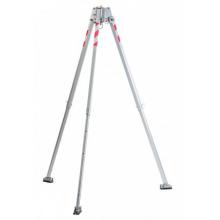
DURAHOIST tripod
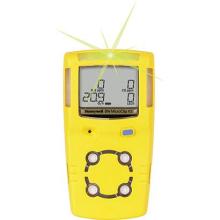
GASALERTMICROCLIP Series

M20-2 self-rescuer

Extractor UB20
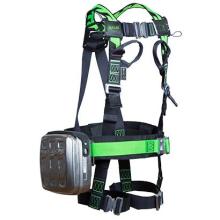
H-DESIGN Harness


