


Butane / C₄H₁₀

Gas Identification
Chemical properties
Physical properties
Flammability limit
Threshold limit value
Butane : Description and use
Butane is a saturated hydrocarbon of the alkane family. It comes in two isomeric forms, n-butane and isobutane or 2-methylpropane. Residual quantities of 1,3-butadiene may be present in butane. The concentration of 1,3-butadiene is variable and depends on the quality of the butane produced. The concentration of residual 1,3-butadiene in butane is generally 0.1% p/p or less. However, residual quantities exceeding 1.0% p/p have been detected.
It is a liquefied compressed gas that is odourless and colourless.
Flammability: Butane is a highly flammable gas. It ignites quickly in the air if exposed to a static charge, a spark, an open flame or any other source of ignition or combustion.
Explosiveness: Butane forms an explosive mixture with air when it is found in concentrations between 1.8 and 8.5%.
- Solvent for paints, varnishes, natural or synthetic resins.
- Solvent used in cleaning and degreasing products and brake fluids. Solvent for coating textiles.
- Solvent used for extracting and purifying the following products: vegetable oils, gums, waxes, perfumes, alkaloids, antibiotics, hormones, vitamins, etc.
- An intermediate in organic synthesis particularly for manufacturing butyl esters used as solvents.
Butane : Warnings and caution
H226 - Flammable liquid and vapour.
H302 - Harmful if swallowed.
H315 - Causes skin irritation.
H318 - Causes serious eye damage.
H335 - May cause respiratory irritation.
H336 - May cause drowsiness or dizziness.
P210 - Keep away from heat, sparks, open flames, hot surfaces. No smoking.
P377 - Leaking gas fire: Do not extinguish, unless leak can be stopped safely.
P381 - Eliminate all ignition sources if safe to do so.
P410+P403 - Protect from sunlight. Store in a well-ventilated place.
P501 - Dispose of contents/container in accordance with local/regional/national/international regulations.

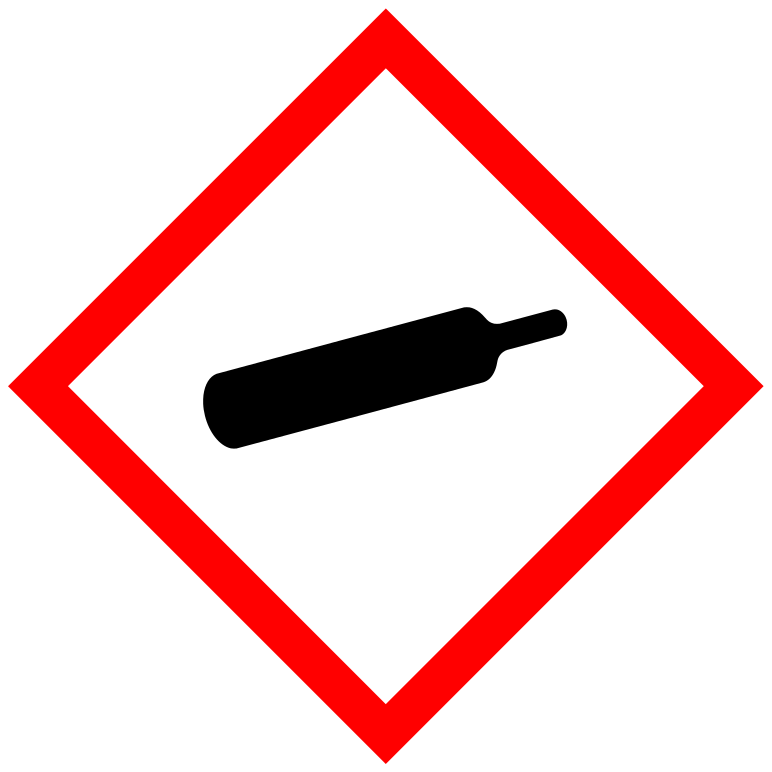
Butane : Related products
Aucun produit disponible n'est actuellement lié à la détection de ce gaz.


